
 English - US
 German - Germany
 Italian - Italy
 English - UK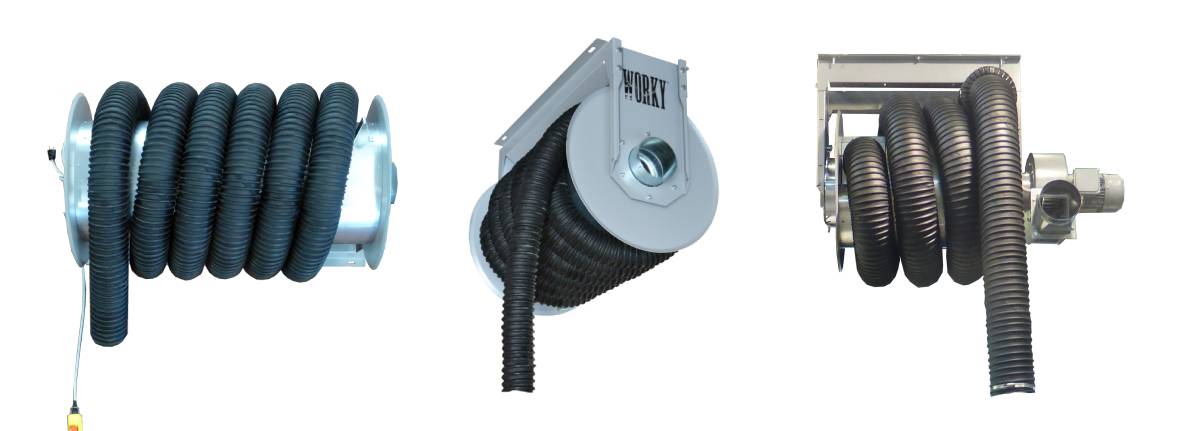
An exhaust extraction system for a workshop is composed of several components necessary to ensure proper functionality and high performance. Among these components, the exhaust gas extraction hose plays a critical role: the quality of the hoses is one of the determining factors that distinguishes a high-performance system from a mediocre one.
In this article, we will explore the most common hose models, provide guidance on how to select the right one, and discuss the crucial importance of these systems for operator health and workplace efficiency.
Key Features of an Exhaust Extraction Hose
An exhaust extraction system is essential in workshops for capturing and conveying vehicle exhaust gases outside the working area. The exhaust extraction hose connects the nozzle (positioned on the tailpipe) to the extractor (either directly or through connection ductwork).
The gases are extracted by the fan unit, conveyed through the hose, and expelled outside the workspace via the discharge stack.

A properly designed system must ensure that the maximum amount of toxic fumes is captured and discharged before they disperse into the workshop, protecting operator health.
Harmful exhaust components such as carbon monoxide, nitrogen oxides, and hydrocarbons can cause respiratory issues, headaches, and long-term health problems. For this reason, equipping the workshop with an adequate exhaust extraction system is a top priority.
The hoses through which the gases flow are a fundamental part of the system, as they enable proper operation by guaranteeing a constant, leak-free flow. Fixed extraction systems must be installed in the work areas where exhaust gases must be intercepted while engines are running.
There are several system configurations and types of flexible exhaust hoses, depending on workshop requirements:
- Miniset systems: compact solutions with wall-mounted fans, hose, and nozzle. Ideal for small workshops or single workstations.
- Hose reels: allow hoses to be rewound after use, keeping the work area clear, improving safety and organization. Often integrated with the extraction fan.
- Mobile units: consisting of a wheeled extractor and flexible hose to discharge exhaust outdoors. Highly versatile and suitable for workshops requiring mobility between workstations.
- Sliding rail systems: the extraction unit travels along a rail, covering multiple work bays and adapting to vehicles of varying length.
- Underfloor systems: fixed installations where extraction is performed through floor pits.
How to Choose an Exhaust Extraction Hose
Selecting the correct exhaust hose is critical for system efficiency and durability. The three primary characteristics to evaluate are:
- Flexibility: the hose must adapt easily to different vehicle positions and allow simple, precise placement of the nozzle.
- Resistance: it must withstand abrasion, chemical agents within exhaust gases, and mechanical wear due to frequent use.
- Durability: a high-quality hose ensures long operational life, reducing replacement and maintenance costs.
Although many hoses may appear similar, their performance and technical quality can differ drastically.
Temperature resistance is a crucial factor—especially for modern vehicles that may generate high exhaust temperatures during diagnostic tests or particulate filter regeneration cycles.
In these cases, high-temperature flexible hoses are essential.
.jpg?width=500&height=231&name=JLR%20-%20TRAINING%20CENTER%20ITALY%20(ITA).jpg)
Main Types of WORKY Exhaust Extraction Hoses
The WORKY GT series includes several models, each with specific features designed to meet a wide range of workshop requirements.
GT2 Flexible Hose
This is a fabric-reinforced hose made from vulcanized EPDM (Ethylene-Propylene-Diene Monomer) rubber for high-temperature resistance on both sides.
- The structure is crush-resistant and maintains long-term flexibility.
- The robust build and tight-pitch reinforcement prevent the hose from stretching during pulling or collapsing under high suction.
- GT2 withstands temperatures up to 200°C and can be used with fixed, sliding, or underfloor extraction systems—ideal for maintenance with engines idling.
High-Temperature Flexible Hoses: GT1, GT3, GT5, and GT7
For systems used to extract exhaust gases during specific tests or procedures (e.g., dynamometer testing, advanced diagnostics, or DPF regeneration cycles), it is vital to use high-temperature flexible hoses.
GT1, GT3, GT5, and GT7—fabric-reinforced with metal spiral—are available in multiple diameters and lengths and resistant respectively up to:
- GT1: 300°C
- GT3: 500°C
- GT5: 700°C
- GT7: 1000°C
These represent the highest-performing high-temperature hoses, essential when operating fume extractors under extreme thermal conditions.
Connection Hoses: GTP and GTA
These hoses are suitable as system connections or discharge ducts.
- GTP: made from polyamide coated with PVC, resistant up to 110°C.
- GTA: crimped aluminium hose, resistant up to 300°C, extensible from 1 to 3 meters, ideal for connections requiring high thermal resistance.
|
Hose Model |
Main Material |
Max Temperature |
Key Features |
|
Vulcanized EPDM reinforced fabric |
Up to 200°C |
Crush-resistant, maintains long-term flexibility, tight-pitch spiral prevents stretching. |
|
|
Reinforced fabric with metal spiral |
Up to 300°C |
Designed for high-temperature resistance. |
|
|
Reinforced fabric with metal spiral |
Up to 500°C |
Very high thermal resistance, robust for intensive use. |
|
|
Reinforced fabric with metal spiral |
Up to 700°C |
For extreme temperatures; ensures safety in critical conditions. |
|
|
Reinforced fabric with metal spiral |
Up to 1000°C |
Maximum thermal resistance for the most demanding applications. |
|
|
Polyamide coated PVC |
Up to 110°C |
Lightweight and flexible; ideal for low-temperature connections. |
|
|
Crimped aluminium |
Up to 300°C |
Extensible 1–3 m, robust, excellent thermal resistance. |
How to Choose the Ideal System: WORKY’s Custom Consultancy
When selecting the components of an exhaust extraction system, it is essential to base the choice on the actual needs of the workshop, particularly:
- the type of vehicles handled (cars, motorcycles, heavy-duty vehicles, etc.)
- operational requirements (occasional use, continuous use, diagnostics, etc.)
- available space relative to the work bays
- specific activities (e.g., workshops performing frequent DPF regenerations require higher thermal resistance)
Relying on an experienced supplier who can recommend the correct system configuration is the best way to avoid incorrect investments and ensure maximum safety and efficiency.
WORKY technicians can develop custom-designed solutions tailored to each customer’s needs, analyzing every scenario in depth to propose optimized, bespoke systems.
If you are looking for a specific exhaust extraction hose or want to install a complete extraction system from scratch, feel free to contact us—our specialists are ready to support you with recommendations and technical advice.
WORKY technicians can develop customised projects, tailor-made to the needs of the customer, studying ad hoc solutions.
If you are looking for a specific exhaust extraction hose, if you wish to install a gas extraction system in your workshop, do not hesitate to contact us: our experts are at your disposal for any suggestions!

Frequently Asked Questions
Why is it so important to have an exhaust extraction system in the workshop?
An exhaust extraction system is essential to protect operator health and safety by reducing exposure to hazardous substances (carbon monoxide, nitrogen oxides, hydrocarbons) contained in vehicle exhaust. It helps create a cleaner and more comfortable work environment, reducing illness, absenteeism, and ensuring compliance with safety regulations.
Which factors should I consider when evaluating exhaust extraction hoses in terms of price and quality?
Key factors include flexibility, crush resistance, durability, and—most importantly—high-temperature resistance, particularly for modern vehicles and specific testing procedures. Material quality (EPDM, reinforced fabric with metal spiral, crimped aluminium) directly affects hose lifespan and performance. Investing in a high-quality hose reduces long-term maintenance and replacement costs.
What are the advantages of high-temperature flexible hoses?
High-temperature hoses (such as WORKY GT3, GT5, GT7, and GT1) are essential for workshops working with extremely hot exhaust gases, such as during forced particulate filter regenerations or power tests. These hoses prevent system damage caused by excessive heat, ensuring operational continuity and safety.
